

Margaux
When most people think of Bordeaux’s Left Bank, their minds leap straight to Pauillac, and understandably so. With its trio of Premier Grand Cru Classé estates, its textbook style and enviable consistency, Pauillac does rather hog the limelight. St Julien and St Estèphe follow in short order. Margaux, alas, is often treated as something of an afterthought. Yet it is the commune from which I drink most at home, and it deserves its share of the spotlight.
Margaux sits as the southernmost of the Médoc’s great quartet. While St Julien, Pauillac and St Estèphe huddle together like a well-drilled regiment, Margaux stands slightly apart, separated from St Julien by a broad belt, nearly ten miles, of generic Haut Médoc. Ironically, the 1855 Classification awarded Margaux more classified estates than any of its northern siblings, yet the commune’s reputation has long been tempered by inconsistency rather than any shortage of peaks.
Those “peaks”, fittingly, are geological as well as vinous. Vineyard quality in the Médoc is governed largely, though not exclusively, by the gravel croupes, the raised, well-drained gravel mounds that warm quickly and shed rain with admirable efficiency. In Margaux, these croupes are more scattered, more variable in depth, and often surrounded by lighter sand or heavier clay. The result is a patchwork of vineyard potential and thus a broader spectrum of quality than one finds further north.
Stylistically, Margaux’s finer gravels retain less heat than the chunkier deposits of Pauillac or St Julien, leaving the commune more exposed in cooler years. Conversely, in warm and dry vintages the wines blossom into something quite glorious: perfumed, refined and unmistakably Margaux. Drainage can also prove less reliable here, so wetter years tend to be challenging. When conditions align, however, Margaux at its best is utterly peerless.
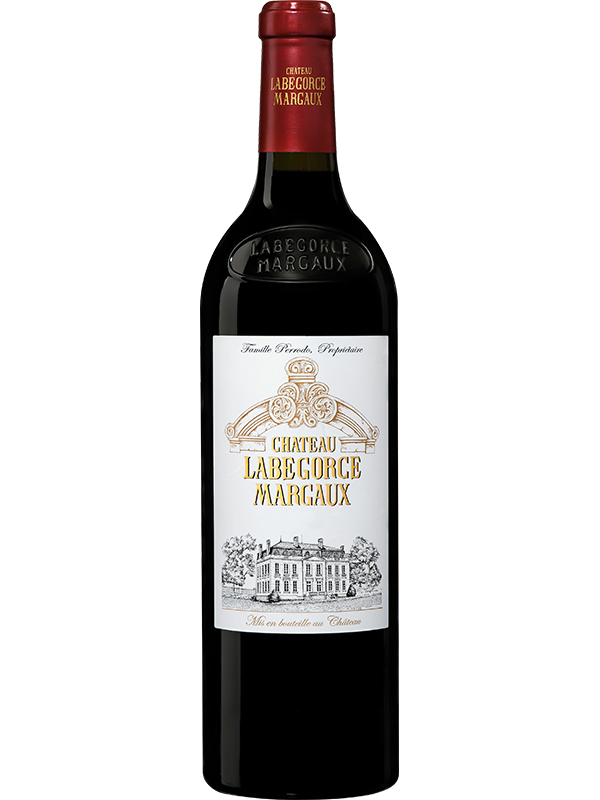
As a result, vintages such as 2011, 2014, 2017, 2021 and, now, 2024 have generally seen Margaux lag behind its neighbours. Yet in 2009, 2015, 2016, 2019 and 2022, vintages that favoured the commune’s strengths, Margaux produced wines of ravishing charm and, in some instances, sheer brilliance. One must simply take a little more care with the vintage chart. That said, several châteaux manage to shine even in the more trying years. Estates with a naturally riper and more generous house style, such as Château Palmer, Malescot St Exupéry and Labégorce, often acquit themselves admirably.